Seven Ways Into a Poem You Can't Read: Translation Drills for Monolingual Poets
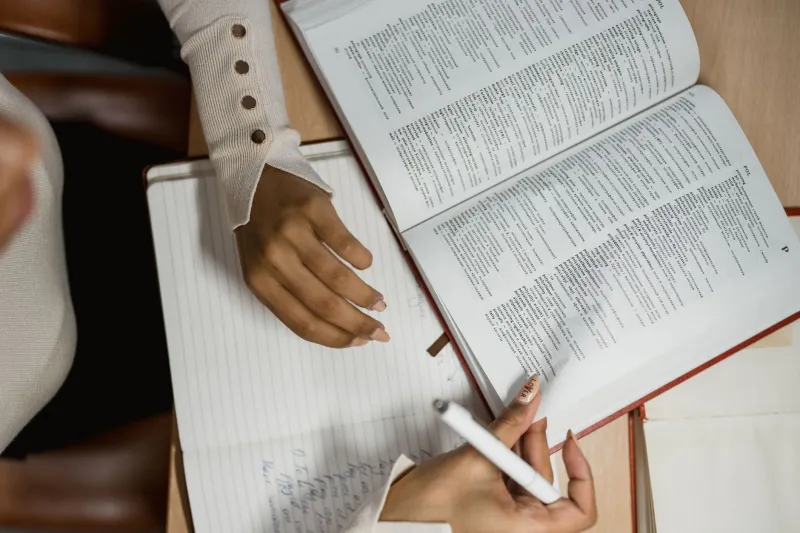
Every fall I get the same email from a friend who teaches creative writing at a state school in the Midwest. It says some version of: my students want to work with translation, none of them speak anything but English, and I have forty-five minutes on Thursday. This piece is my answer to that email, and to the poets who write to me saying they feel shut out of translation because they never got the language.
Here is the reframe I keep offering: translation is not a fluency test. It is a craft exercise with a built-in antagonist — a text that will not do what you want. Name almost any problem you are working on in your own poems and translation will make you confront it, because you cannot coast on your own habits when the source is pulling in another direction.
The seven exercises below are ordered roughly from safest to strangest. Do them in a group, do them alone, do them badly. Badly is fine. Badly is often where the poem is.
1. The Gloss Handoff
Get a literal, word-by-word gloss of a short poem — four to eight lines. Ask a speaker, use a dictionary, or generate one and then have someone check it. What you want is ugly: a stack of English words in the original order, with grammatical glue stripped out.
Now write a poem from that stack without consulting anything else. No looking up the fluent version. Your job is to make decisions the gloss refuses to make for you: where does the line break, which word gets promoted, what tense does this verb want. Keep a copy of the gloss and a copy of your draft side by side. The gap between them is your aesthetic, made visible.
2. Parallel Translations as Sheet Music
Find three published English versions of the same poem. Read them in silence, then read them aloud, one after another. Take notes only on where they disagree — an image one translator kept and another dropped, a word that comes out as grief in one version and homesickness in another.
Then write your own version that takes a side. Not a synthesis; a vote. Students find this one liberating because it removes the fantasy that there is a single correct answer waiting for them, and because arguing with a translator is much easier than arguing with a blank page.
3. The Constraint Rewrite
Take any decent published translation of a poem and rewrite it under a rule that the original did not obey. Every line exactly seven syllables. No word longer than two syllables. Nothing but monosyllables, all the way through. Or a rule imported from the source tradition: a rhyme at every line ending, a fixed count of beats.
The point is not to improve the translation. The point is to feel what a formal constraint does to word choice when the meaning is already fixed. Poets who write free verse almost always come out of this one startled by how much pressure a small rule applies.
4. Read It Out Loud, Badly
Find a recording of the poem in its original language — a poet reading, an archive clip, a friend's voice memo. Do not try to pronounce it correctly. Just imitate the sounds. Then write a poem that follows the oral contour: where the original speeds up, speed up; where it holds, hold.
This exercise repairs something most of us did not know was broken. English-language poetry training tilts hard toward the eye. Borrowing another language's mouth for twenty minutes will teach you more about your own line than a semester of scansion drills.
5. The Missing Word Inventory
Take a translation and list every word that appears to be doing more work than its length suggests — usually the small, plain ones, the nouns that have been quietly freighted by the culture they came from. Ask what that word would mean to a reader who grew up inside the source tradition, and what it means to you.
Then write a poem in which one of those words is the load-bearing element, and you are not allowed to explain it. Students often discover here that their own work has been over-explaining, and that a word trusted by the poet can carry a whole room.
6. The Echo Test
Write a poem of your own. Translate it into a language you do not speak, using a tool, and do not correct anything. Then translate the result back into English, again without correcting. Read the returning poem next to your original.
What survives is usually the skeleton — an image, a turn, a tone of voice — and what vanishes is usually your cleverness. It is a bracing little audit. Most of us find that the parts we were proudest of are the first to go, and the parts that come home are the ones we would not have guessed were essential.
7. Translate It Into Your Own Block
Last one, and my favorite for classrooms. Take the source poem's situation — a person leaving, a person waiting, a night of bad sleep — and relocate it entirely. Your town. Your street. The bus shelter on Route 9. The parking lot behind the diner at 2 a.m. Keep the poem's emotional architecture and swap out every piece of furniture.
Groups love this one because it lets them read their own lives as translation. It also flushes out the students who think of foreign poetry as decorative, and it produces the loudest work of the semester almost every time.
A Word About Credit
Use public-domain texts when you can — the Tang and Song poets are generous that way. When you are working from a living poet, get permission or keep the exercise private. And when you publish a piece that began with a gloss, say so in a note. Naming your sources is not a formality; it is part of the practice, and it teaches students that translation is a relationship rather than a raid.
If you try any of these with a group, I would like to hear how it went. Bring the failures. The failures are usually the interesting part.