Before the First Line: The Conversation I Have With a Living Poet
I keep a folder on my laptop called permissions. It is not glamorous. It holds email threads, signed letters, awkward follow-ups, and a few kind notes from poets who said yes before they had any real reason to trust me. Every time I open it, I am reminded that translation is not only a literary act. When the poet is alive, it is also a relationship.
That relationship starts with a question, not a draft. Before I translate a living poet, I want to know what they think translation is for. I want to know what they are protective of, what they are tired of explaining, and whether they would rather be consulted or left alone. The permission letter is my way of asking those things without pretending that a legal release is the same as consent.
Start with curiosity, not paperwork
The worst first email I can imagine is the one that arrives with a contract attached and a deadline in the subject line. It says, in effect: I have already decided to translate you. Please sign here. Even if the intention is respectful, the order is wrong.
My first note is short. I introduce myself as a translator and a reader. I name one or two poems that made me want to write, and I explain what I think translation might do for them. I do not overpraise. I do not promise a publisher I do not have. I do not call the work untranslatable, because that usually means the translator wants credit for solving a problem the poet never asked them to solve.
Then I ask a simple question: would you be open to a conversation about translation? Not a yes to publication. Not a yes to me. Just a conversation.
A model letter I actually use
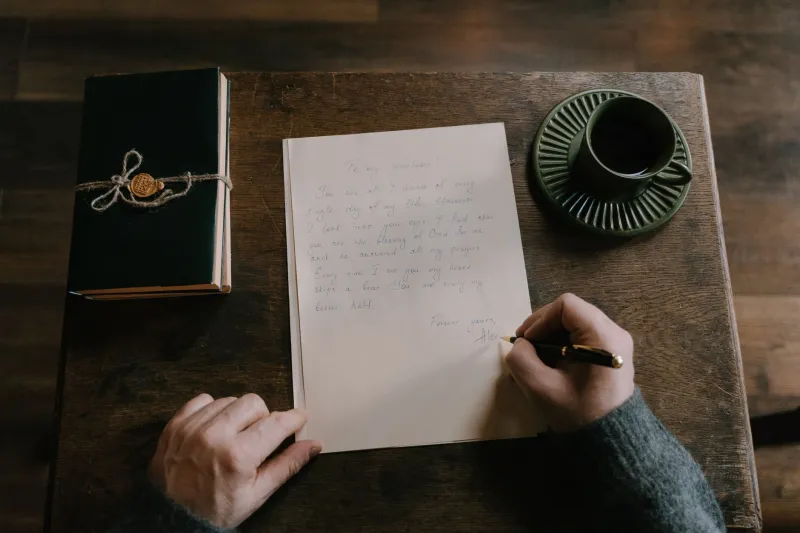
I vary the details, but the shape stays similar. Something like this:
Dear [Poet],
My name is [Name], and I am a translator working on [language] poetry. I first read your poem [Title] in [Venue or Collection], and I have been living with it for a while. What interests me is not only what the poem says but how it moves, especially [specific detail].
I would like to ask whether you are open to a conversation about an English translation. I am not asking for a commitment today. If you are willing, I would like to learn how you feel about translations of your work, what you would want a translator to understand, and whether there are boundaries I should know about.
If it is useful, I can send a short sample and a few notes on my approach before we talk. I am also happy to speak by email, phone, or video, whichever is easiest for you.
Thank you for your time and for the work.
Warmly, [Name]
That last line matters. The poet is not a gatekeeper to be managed. They are the person whose work made the conversation possible.
Talk about rights, but do not lead with them
Eventually, yes, we have to discuss rights. Which poems? Which territory? Which publisher? For how long? Is this a journal publication, a chapbook, a full collection? Will the translation be exclusive? What happens if the project stalls?
Those questions are necessary, but they are not the first questions. If I lead with them, I teach the poet to hear my enthusiasm as a transaction. If I lead with the work, the rights conversation becomes easier because we already know what we are protecting.
I also try to be clear about what I cannot offer. I cannot guarantee a publisher. I cannot guarantee that every line will satisfy them. I cannot promise that my English will sound like their Chinese, Arabic, or Spanish. Translation is not a duplicate. It is a second life, and second lives have their own weather.
Handle sensitive work with extra care
Some poems carry family history, political risk, grief, or private experience. When a poem feels sensitive, I ask before I speculate. I do not turn the poet into an informant. I do not ask them to explain every image as if the poem were a coded message. I ask whether there are parts they would rather I not emphasize, and whether there are contexts they want included in a translator's note.
I also ask how they want to be described in public. Do they want their name in the byline? Do they want approval over the final draft? Do they want to see the translation before it goes to an editor? Some poets want a close partnership. Others want distance. Both are legitimate. The mistake is assuming that my preferred model is the respectful one.
Red flags I watch for
On my side, the red flags are mostly about speed and certainty. If I find myself promising too much, rushing the first contact, or treating silence as consent, I stop. If I start complaining about how hard it is to reach the poet, I remind myself that I am not owed access.
On the other side, I pay attention when a poet asks for changes that would make the translation dishonest, or when a publisher wants a release before the poet has seen a single line. I also notice when I am the one being vague. A translator who will not explain their process is asking for a lot of trust without offering much evidence.
A short checklist before I send the letter
- Have I read enough of the poet's work to ask a specific question?
- Is my first email free of pressure, deadlines, and legal language?
- Have I explained what I want to do without pretending it is already arranged?
- Have I asked about boundaries, not just permission?
- Do I know how the poet wants to be credited and consulted?
- Am I ready to hear no, or not yet, without making it mean something about my craft?
Permission is not a formality. It is a small act of hospitality between two people who care about the same poem. I have learned to slow down at the start, because the first line of a translation is easier to write when the first conversation has been honest.