Six Beautiful Wrong Turns: A Small Museum of Poetry Mistranslation
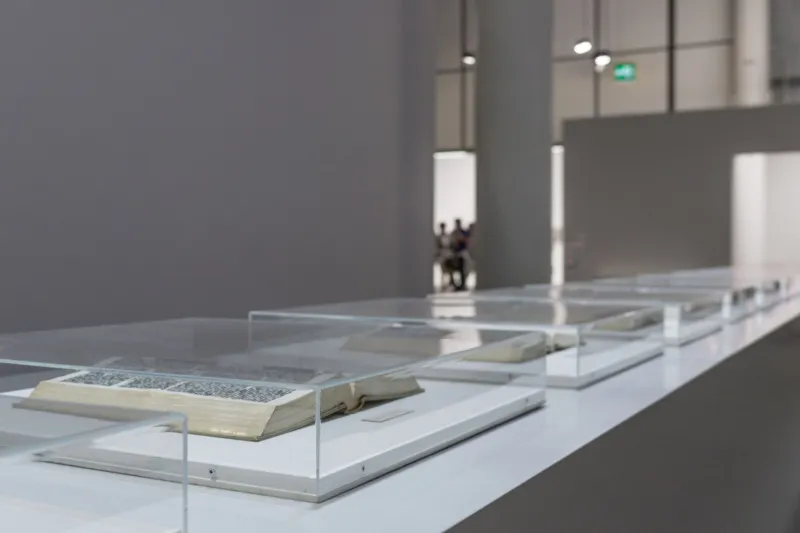
I keep a folder called The Mistranslation Museum. It is not a real museum, though I wish it were: a small, well-lit room where labels explain how a poem crossed a border and came back changed. Admission would be free. The gift shop would sell erasers and better dictionaries. The point would not be to laugh at mistakes. The point would be to notice that English poetry is full of inherited wrong turns that turned out to be rooms.
I use the word mistranslation loosely here. Some of these are plain errors. Some are deliberate liberties. Some are choices that hardened into tradition so long ago that we no longer see them as choices. A good museum label would say all three.
1. The bamboo stilts: Ezra Pound, 1915
Ezra Pound's The River-Merchant's Wife: A Letter is routinely called a translation of Li Bai. It is closer to a collaboration with a ghost. Pound worked from notes and earlier versions; he did not read Chinese fluently. The famous line about coming by on bamboo stilts, playing horse, is a Pound invention or at least a Pound intensification. Yet ask an American poet to name a Chinese poem and this is often the one they mean. The error became a doorway. The lesson is not that accuracy does not matter. The lesson is that a translated poem has a second life in the receiving language, and that life can be vivid even when the passport is messy.
2. The smoothed stone: Witter Bynner and Kiang Kang-hu, 1929
Witter Bynner's Jade Mountain, made with Chinese scholar Kiang Kang-hu, belongs in the museum's smoothing wing. Bynner wanted Tang poetry to sound like English poetry. He added connective tissue, adjusted syntax, and let rhyme and cadence make decisions. Some of those decisions are liberties; some are probably errors. But for generations of US readers, Bynner's versions were the Tang dynasty. The poems arrived with his pacing, his pauses, his occasional English velvet. That is how inheritance works. We do not inherit the original. We inherit somebody's shaping of it.
3. Cold Mountain in American slang: Gary Snyder, 1958
Gary Snyder's Cold Mountain poems took Han Shan's hermetic Chinese and gave him American slang, hiking boots, and a Beat grin. Snyder was not pretending to be a neutral lens. He was making a version for his own time and place. Some lines are loose; some are more Snyder than Han Shan. But the poems became part of the US poetry landscape, and they taught American readers that an ancient Chinese hermit could sound like a guy you might meet on a trail in California. The error, if we call it that, was productive. It made a bridge out of idiom.
4. One hundred poems, several freedoms: Kenneth Rexroth, 1956
Kenneth Rexroth's One Hundred Poems from the Chinese belongs in the imitation room. Rexroth often worked from other translations and his own sense of English measure. He changed line breaks, modernized diction, and sometimes let a Chinese poem become a short American lyric. Purists have complained, rightly, that you cannot always tell where the Chinese ends and Rexroth begins. But readers keep returning to those versions because they move. The museum label should say: Deliberate liberty. Handle with care. Do not mistake for the original.
5. The Book of Songs with an English ear: Arthur Waley, 1918
Arthur Waley's A Hundred and Seventy Chinese Poems helped invent the modern English taste for Chinese poetry. Waley was a serious scholar, but he was also a writer with an ear for English cadence. His versions sometimes flatten Chinese compression into English explanation, and his rhythm can feel more Edwardian drawing room than Tang court. Still, Waley's choices taught US readers how to hear a Chinese poem in English. The error is not that he had a style. The error would be pretending he did not.
6. The bed in the moonlight: Li Bai, repeated ever since
Consider Li Bai's Quiet Night Thought, maybe the most anthologized four lines in Chinese poetry. The first word, often rendered as bed, can be argued about: bed, well, window, platform. English versions have mostly settled on bed, and that choice has become the poem for many readers. The moonlight is on the bed; the speaker raises his head, lowers it, thinks of home. Is that a mistranslation? Maybe not. It is a decision that hardened into a tradition. The museum should have a case for those: choices so widely repeated that they stop looking like choices.
What the museum is for
What can translators learn from all this? First, keep a record of your wrong turns. They may be the most interesting thing you make. Second, do not confuse a beautiful English poem with a reliable map. Third, give the reader a label: translation, imitation, version, adaptation. The label is not an apology; it is a guide. Finally, remember that US readers are already walking through a museum of inherited versions. When we publish a new translation, we are adding a room. Build it honestly. Put a window in. Let the moonlight fall where it actually falls.