The Draft Is Not the Poem: Why 'Raw' Is a Poor Compliment for Translated Poetry
There is a word that follows translated poetry around like a gold star that has been reused too many times: raw. The poem is raw. The language is raw. The translation is admirably raw. In a review, it sounds like praise. In a workshop, it can sound like a diagnosis. And in the wrong hands, it becomes an excuse.
I have nothing against rawness as a quality. A first draft can be raw. A notebook can be raw. A poet's early work can be raw in the way a demo tape is raw—alive, unpolished, and valuable precisely because it shows the wires. But when we talk about published translations, 'raw' too often means something less flattering: awkward English that nobody would have let stand if the poem had arrived in English the first time.
That is the conversation I want to have. Not whether translation should be faithful. Not whether translators should be visible. Those arguments matter, and I have made them in various rooms. The narrower question is this: why does the poetry world keep handing out praise for drafts?
The Blurb Problem
You have seen the language. A translated collection is 'unvarnished.' A translator 'resists the temptation to smooth.' The poems are 'rough-hewn,' 'literal,' 'bravely unidiomatic.' Sometimes those phrases are accurate and earned. Sometimes they are a way of saying that the translator did not finish.
Imagine the same sentences attached to an original English collection. These poems are rough-hewn and unidiomatic. Maybe. But if every line wobbled, if prepositions landed like dropped plates, if the syntax made a reader stop and say 'wait, what?'—an editor would ask for another pass. That is not because English poetry must be polite. It is because English poetry must be made.
Translation is not exempt from that making. A translator is not a stenographer taking dictation from a foreign language. A translator is a writer under constraint. The constraint is real and severe, but it is still writing.
What 'Raw' Is Hiding
Take a hypothetical line from a poem I have been working on in my own notebook—not to confess anything, just to show the problem. A literal draft gives me this:
In the room of the heart there is a chair not sit.
It is honest. It points at the source. It also fails as an English line, because 'a chair not sit' is not a phrase that carries meaning without a reader doing repairs. The translator knows what it means. The reader should not have to.
A finished version might be:
In the heart's room a chair no one sits in.
The meaning has not been inflated. Nothing has been added that the source did not imply. But the line now has a rhythm, a syntax, and a small pressure at the end. It sounds like something a person could say. More importantly, it sounds like something a poem could do.
Here is another before-and-after, from the same imaginary desk:
Before: The river speaks under the bridge with a voice of stone.
After: Under the bridge, the river speaks in stone.
The second version is not fancier. It is tighter. It lets the image do its work without explaining the metaphor to death. That is revision. It is not betrayal. It is the difference between a translator showing you the source and a translator making a poem in English.
Revision Is Not Sanitizing
The strongest objection to polishing is that it sandblasts away the foreignness of the original. If the source is jagged, the translation should be jagged. If the syntax is strange, the English should feel strange. I agree. But there is a difference between strangeness that has been designed and strangeness that has been left behind.
A translator can make English feel foreign on purpose. That is a craft choice. It might mean holding a clause longer than English usually allows, or repeating a word until it becomes an object, or refusing a natural idiom because the poem is built on the pressure of not sounding natural. Those choices are legible. They have intention behind them.
Careless English is different. It does not feel foreign; it feels unfinished. It makes the reader do work the translator should have done. And when we call that 'raw,' we are not honoring the source. We are lowering the bar for the translation.
Showing Process vs. Settling for a Draft
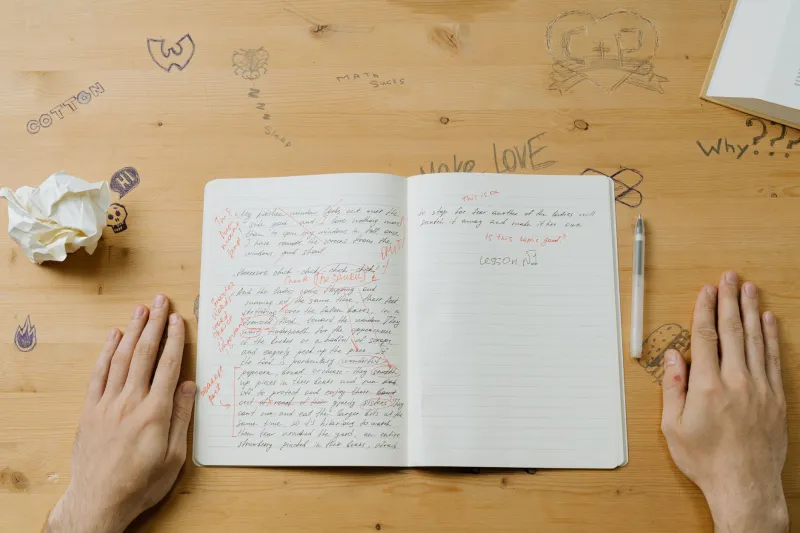
This is where the conversation gets tangled. I love translation notebooks. I like seeing drafts. I have published pieces about the value of showing work in public, and I still believe it. A draft can teach. A draft can reveal the translator's choices. A draft can be a gift to other translators.
But a notebook is not a poem. A blog post about a draft is not the same thing as a finished translation between covers. The problem is not that we show process. The problem is that we sometimes confuse process with product. We praise the draft because it is honest, and then we forget to ask whether the finished poem is any good.
That is not fair to the translator, either. Translators need room to revise. We need editors who will say, 'This line is not yet English,' without implying that we have betrayed the original. We need readers who can tell the difference between a translation that is deliberately strange and one that is simply tired.
Three Quick Tests for a Finished Line
When I am working on a translation and I feel the word 'raw' creeping in as a defense, I run a few checks. They are not scientific. They are just ways to keep myself honest.
- Read it aloud. If I stumble, is the stumble meaningful or accidental? A poem can make me stumble on purpose. It should not make me stumble because the translator ran out of time.
- Check the small words. Prepositions, articles, conjunctions. These are where drafts hide. 'A chair not sit' fails on the small words. So does a line that uses 'of' three times because the translator could not decide what the relationship actually was.
- Ask whether it would survive in an original collection. Not whether it sounds like every other American poem. Whether it sounds like a poem someone meant to write. If the answer is no, the draft is not done.
A Workshop Exercise
Here is one I have used with students and with myself. Take a translated draft you have been protecting because it feels 'raw.' Put the source text away. Spend twenty minutes revising only the English—no consulting the original, no checking the dictionary. Make it sound like a poem in English. Then bring the source back and see what you lost, what you kept, and what you were afraid of.
You will probably find that the meaning survives. You may find that the rhythm improves. You may find that a line you thought was essential was only a habit. That is not a failure of fidelity. That is translation doing its work.
Raw is a stage. It is not a destination. A translated poem deserves the same finished English we ask of any poem—not because the source should disappear, but because the reader deserves a poem that has been made.
So let us retire 'raw' as a compliment for published translation. Praise the risk. Praise the strangeness. Praise the honesty of the draft when it is offered as a draft. But when the book is in my hands, I want the translator to have finished the job. I want the poem to be alive in English, not just faithful to the dictionary.
That is not a smaller ambition. It is the whole thing.