The Poet Who Said No First: Notes on a Reluctant Collaboration
The first email was three sentences long. She thanked me for thinking of her poems, said she did not want them translated, and asked me to understand. It was polite, final, and signed with her full name. I read it four times standing in my kitchen, then put my phone face down on the counter like it had said something rude.
I had been reading her work for a decade. I had a folder of private drafts — poems I had translated for myself, the way some people keep a journal — and I had never shown them to anyone, partly because they weren’t good enough and partly because I had a feeling she would not want them to exist. When a publisher asked last winter whether I would consider a selected volume, I said yes before I thought about the yes. That was my first mistake, and it was a small one. The larger one would have been to treat her refusal as a scheduling problem.
The No Was Not a Door Closing
It is tempting, when a poet resists translation, to hear vanity or fear. Usually it is neither. She had been translated before, and she had been translated badly — not maliciously, just carelessly. A poem of hers had appeared in English with the line breaks tidied into prose, and another had acquired an ending it did not have in the original. She told me later that reading those versions felt like hearing someone describe her house to a stranger and getting the rooms wrong in a way that made the whole layout seem pointless.
Her specific fear was stranger and more useful than I expected. She said translation made her sound like a person who had never doubted anything. In her language, she explained, a sentence can lean on a particle the way a chair leans on one short leg. In English, my early drafts had leveled the floor. I had made her certain. I had made her graceful. I had, in the most courteous way possible, improved her, which is a thing translators do when we forget that the poem is not ours to fix.
The Phone Call That Was Mostly Listening
A mutual friend — a novelist who had known her for years — offered to set up a call. I expected a negotiation. What I got was ninety minutes in which I spoke for maybe twelve. She asked why this book, why now, what I would do with the title poem, and who I imagined reading it. She asked whether I had ever lived in a country where I could not read the street signs. She asked what I would do if she hated every draft.
I did not pitch. I took notes. Near the end I said the only honest thing I had: that I would rather make a smaller, stranger book she could live with than a smooth one she would disown. There was a pause long enough that I checked the screen to see if the call had dropped.
Then she said, “Send me one poem. One. And I will tell you what you got wrong.”
That was not a yes. It was a test, and I knew it, and I was grateful for it.
Permission Is a Verb
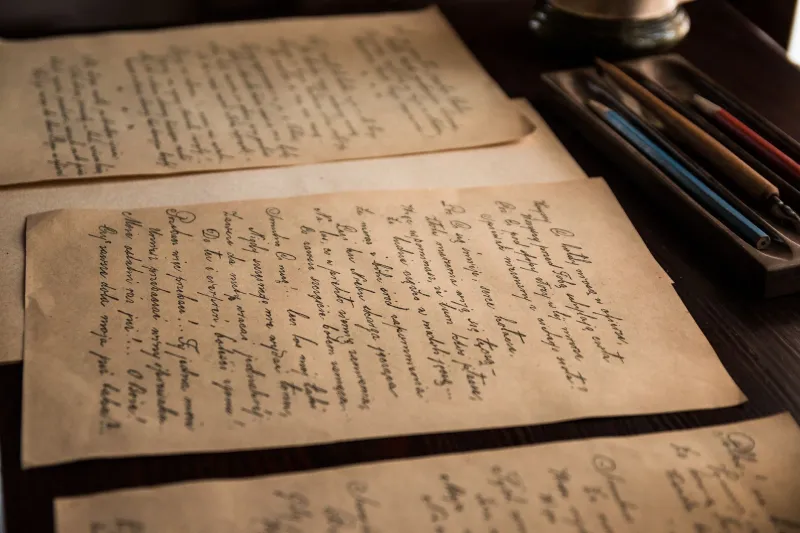
I sent the one poem with two attachments: my translation and a short set of notes explaining every choice I was unsure about. Not a defense — a list of open questions. She returned it a week later with red marks, a scanned page of her own commentary, and a voice memo recorded in her kitchen, which is where, I have learned, most of the real editorial work in the world gets done.
The memo was eleven minutes long. In it she said the word “no” perhaps twenty times, and each no was different. No to a comma. No to a rhyme I had smuggled in. No to a line I had clarified because I was afraid the reader would be lost, which she called “kindness that costs the poem its balance.” She also said yes twice, quietly, and one of those yeses I still think about.
We worked out a process that some translators would find unbearable. She saw every draft before it went to the editor. She had approval over final versions. There were weeks when this was painful — a deadline moved, a poem set aside, an argument about a single pronoun that took four emails and one very long walk around my neighborhood. But the process gave me something I had not expected: a reader who knew the poem from the inside, and who was willing to tell me when I had gotten lost in my own English.
Trust did not arrive all at once. It accumulated in small, unglamorous deposits. Sending drafts before I was proud of them. Admitting when I did not understand a line rather than guessing and hoping. Not defending a choice simply because it was mine.
What the Resistance Changed on the Page
Her resistance made the book better in ways I can point to. My early drafts had a lyric lift I now recognize as a bad habit — a tendency to make poems sing when they wanted to mutter. She circled a small connecting word in one draft and wrote in the margin, “I put that there to be ugly.” I kept the ugliness. I have since defended that ugly little word at three readings and in one argument with a copy editor.
She also protected her ambiguities. There is a line in one poem that can be read as either a question or a statement, and in Chinese the ambiguity is not a trick — it is the whole emotional situation. My first draft made it a question because English wanted a question mark. She asked me to leave the reader unsure. I did, and a reviewer later called it a flaw, and I have never been happier to be corrected in public.
Mostly, she taught me to stop smoothing the seams. A translated poem can be seamless, and often should be. But some poems are built out of seams, and a translator who removes them is not being faithful — just tidy.
Advocate and Interpreter, Not Author
People ask what a translator of a reluctant poet actually does all day. The answer is that I do two jobs that sometimes pull against each other. As an advocate, I make the case for the book — to editors, to reviewers, to the people who decide what gets shelved where. As an interpreter, I answer to her. I am not the poem’s owner and I am not the author’s lawyer. I am the person who has to be able to explain, on any given Tuesday, why a comma is where it is.
That is a modest role, and I have come to like it. The resistance kept me honest. When the poet does not want to be translated, every choice has to survive a conversation rather than a mood.
What I Tell My Students Now
In workshop, when a student announces plans to translate a living writer, I ask whether they have written the letter yet. Not the contract — the letter. Ask. Be prepared for no. A no is not always the end of the story, but it is always information, and sometimes it is the beginning of the most honest work you will do. I also tell them to pay the poet, send copies, and put the translator’s name where people can see it. Permission is not a signature on a contract. It is a relationship you renew with every draft.
The book arrives next fall. She wrote the preface, which I did not ask for. In her last email before the pages went to press, she wrote: “I still do not like translation. But I like this book.”
I have received warmer reviews. I have not received a better one.