Pencil in the Gutter: What Borrowed Translations Taught Me About Reading

Photo by Photo by Brett Jordan on Unsplash on Unsplash
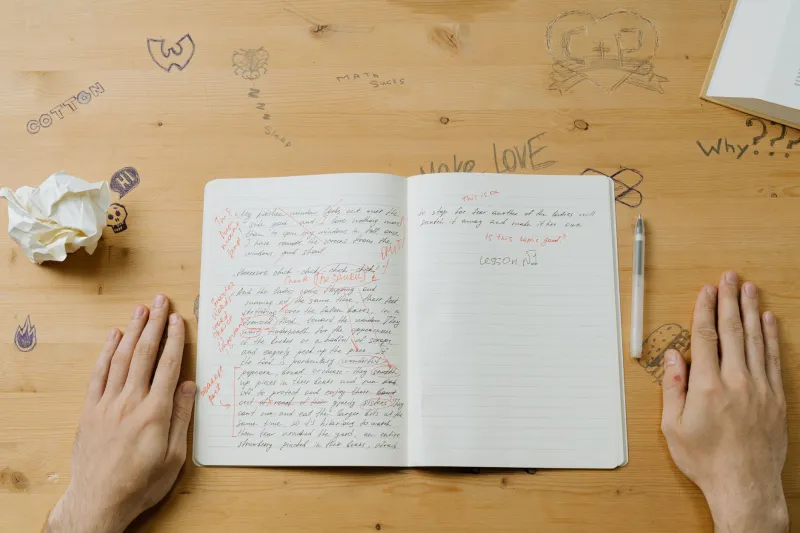
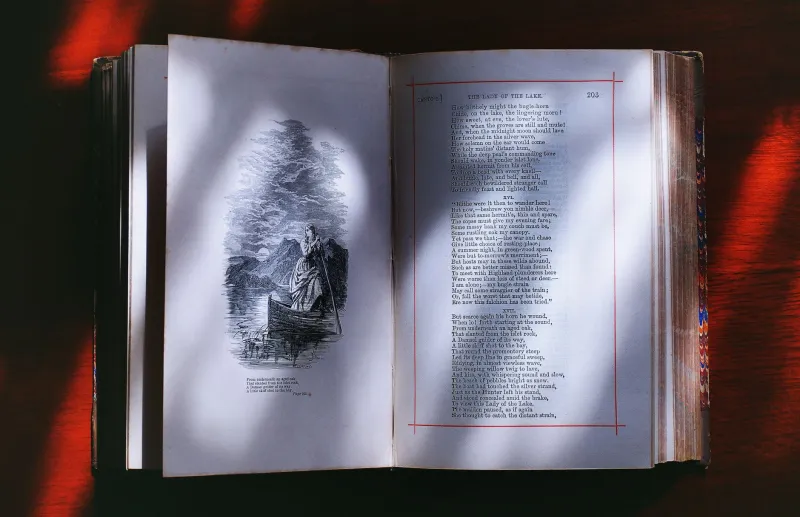
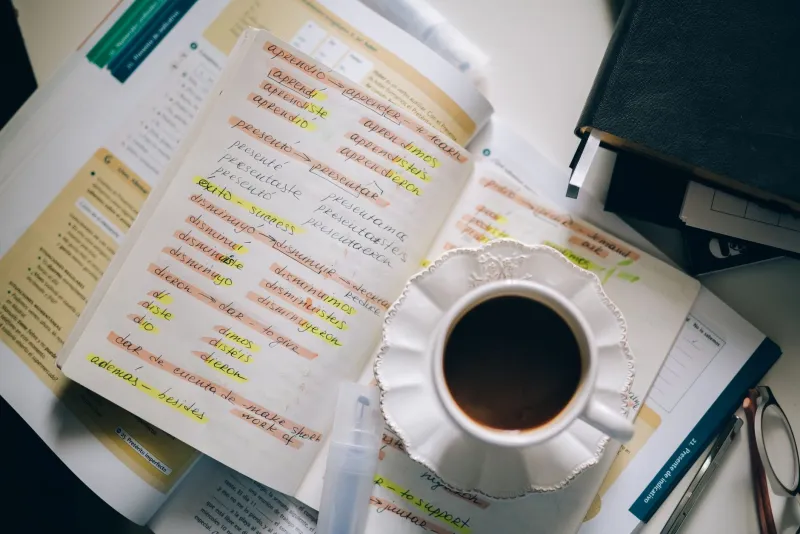
I have a bad habit: I buy used copies of translated poetry and then spend more time with the previous owner's pencil marks than with the poems themselves. A clean copy feels suspicious to me now. Give me a book with a cracked spine, a coffee ring on the title page, and a stranger's underlining running through the middle of a stanza, and I will pay full price. This is not a scholarly method. It is closer to eavesdropping.
The Grocery List That Outlasted the Poem
Last month I opened a library-sale copy of a bilingual Chinese poetry collection — English on one side, Chinese on the other — and found a grocery list tucked at the center: oat milk, dish soap, call Mom. The list was written on the back of a hardware-store receipt. The poem on that page was a short, severe lyric about exile. Someone had underlined the line about the moon and written next to it: 'same.' That was it. Same. Not a thesis. Not a translation note. Just a reader saying: I have been there.
I have found worse. A train ticket from New Jersey. A pressed leaf. A phone number with no area code. A child's drawing of a house on the inside cover of a used copy of Li Bai. These objects are not marginalia exactly. They are the debris of a life that happened while the book was being read. But they sit beside the poem, and they change the poem's temperature.
Underlines as a Reader's Fingerprint
When I read a translated poem, I am already reading at least two people: the poet and the translator. A used copy adds a third. The underlines are that third reader's fingerprint. They show where the poem caught. Sometimes the caught place is obvious — a line about loss, a line about leaving. Sometimes it is strange. In one copy of a translated Rilke, someone had underlined every mention of a window. Not the angels. Not the darkness. Windows. I still think about that reader. What were they looking out of? What were they waiting to see?
American readers often come to poetry in translation with a kind of nervous respect. We are told the work is important. We are told we are missing something. The marginalia in these books tells a different story. Readers are not bowing. They are arguing. They are drawing arrows. They are writing 'no' and 'yes' and 'really?' next to lines that were probably very difficult to translate. That is not disrespect. That is the poem doing its job.
What the Translator Cannot See From the Desk
I have translated poems for years, and I know the desk view. You sit with a dictionary, a draft, a cup of tea going cold. You worry about the line break. You worry about the register. You worry about whether the word you chose for 'smoke' sounds like smoke or like a chemistry report. What you cannot see from the desk is the reader's hand moving across the page. You cannot see the grocery list. You cannot see the train ticket. You cannot see the moment when someone writes 'same' in the margin and closes the book.
That is probably good. A translator who spends too much time imagining readers becomes a translator who is trying to please everyone. But every so often, a used copy arrives like a field report. It says: here is where the poem landed. Here is where it missed. Here is where a stranger put down their pencil and went to call their mother.
A Borrowed Book Is a Conversation
Libraries are the best place to find this conversation, because library books are borrowed twice. First by the person who read them, then by you. The marginalia in a library copy has a particular quality. It is provisional. People underline in pencil, not pen. They write small. They know the book is not theirs. There is something tender about that. A reader who knows they must give the book back still leaves a mark. They still want to say: I was here, and this line did something to me.
I found a copy of a translated Polish poet in a branch library in Ohio. In the back, someone had copied out a single line in blue ink and then crossed it out. I have no idea why. Maybe they decided the line was too private to leave in a public book. Maybe they got it wrong and wanted to erase the error. Either way, the crossed-out line is now part of the poem for me. It is a little ghost of a reader changing their mind.
The Margin as a Second Translation
Readers translate too. They take the translator's English and turn it into something they can use — a memory, an argument, a note to self. The margin is where that second translation happens. It is not always elegant. It is often a grocery list. But it is honest. It shows that poetry in translation is not a finished product handed down from on high. It is a working object. It gets carried around. It gets underlined. It gets used.
I used to think of translation as a bridge between languages. Now I think of it more like a borrowed book. You take it home. You read it. You leave something in it. Then you give it back, and the next reader finds your mark and wonders who you were. That is not a failure of the bridge. That is the bridge doing its job.
What I Do With Them Now
I keep the grocery lists. I have a small folder of them, along with the train tickets and the pressed leaves. I do not keep them for scholarship. I keep them because they remind me that the poems I translate are not mine alone. They belong to the readers who argue with them, underline them, and call their mothers after reading them. That is the audience I want to write for — not a crowd of experts, but a room of people who are willing to leave a mark.
So if you borrow a book of translated poetry from me, know this: I will notice if you write in it. I will probably be glad.