The Poem That Traveled by Hand: What a 2026 Translation Chain Revealed
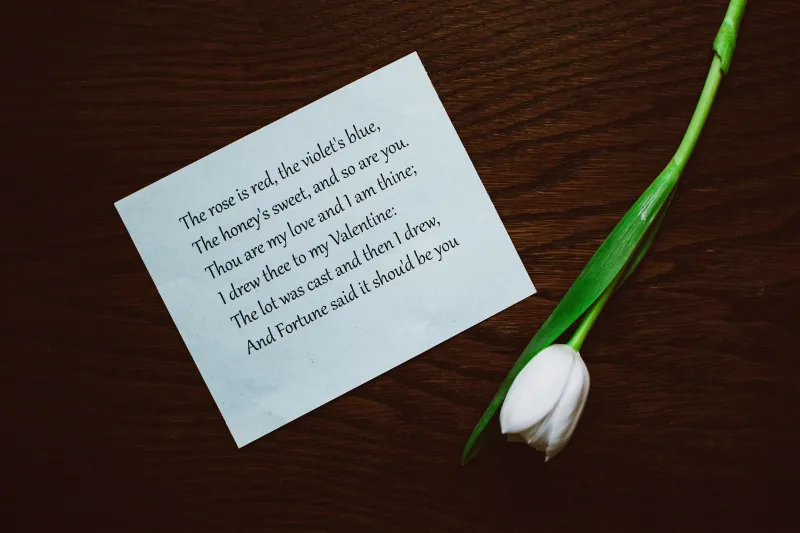
In March 2026, I ran a small experiment I called the Exquisite Corpus. I took a sixteen-line poem—a public-domain Chinese lyric I had been working with in draft—and broke it into sixteen cards. Each card held one line, plus a short note: translate it, paraphrase it, or make it strange; then pass it to the next person in your chain. No one saw the whole poem. No one saw the other chains. I recruited thirty-two readers, most of them not translators, and let the cards travel.
The Rules, Such as They Were
Each seed line started two chains. A reader had forty-eight hours to send a version to the next person, and the next person worked only from what arrived. I asked for no explanations, no source text, no dictionary screenshots. The point was not fidelity. The point was contact. If a line turned into a question, the question traveled. If a reader thought “moon” was too pretty and wrote “porch light,” the porch light traveled.
This was not a game of telephone exactly. Telephone punishes drift. I wanted to watch drift become interpretation. A translation chain like this makes visible what usually stays hidden: the small decisions readers make when they believe they are only passing something along.
What Mutated First
Pronouns went early. A first-person speaker became “we,” then “you,” then a general “anyone.” In one chain, a line about waiting for someone turned into a line about waiting for a bus. That should have been a disaster. Instead it clarified the loneliness. The bus was specific. The bus had a schedule. The original line had only weather.
Concrete nouns were next. Persimmons became peaches. A river became a highway. A bell became a phone. None of these substitutions were random. They were domestications. The readers were making the poem fit the rooms they lived in. One participant later told me she changed “courtyard” to “backyard” because “courtyard” sounded like a hotel. Fair enough. In American English, a courtyard can feel like architecture. A backyard feels like a family.
Syntax also loosened. Chinese-like compression, which I had tried to preserve in the seed, became English explanation. One line that had been a fragment—“cold lamp, late rain”—arrived at the end of its chain as “The lamp was cold and it was raining late.” The image survived. The hush did not. I missed the hush, but I understood the trade. Readers paraphrase toward clarity. Clarity is a kind of hospitality.
The Mistakes That Survived
The most interesting part was not the errors that disappeared. It was the errors that stuck. In one chain, a reader mistook a word for “mirror” instead of “moon.” The next reader noticed the line made little sense but kept the mirror because it was beautiful. By the fourth pass, the mirror had become central. The final line was about a face reflected in a window at night. Was it wrong? Yes. Was it also a reading? Yes.
Another chain lost a negative. A line that said “do not ask” became “ask.” The chain then spent three passes trying to make the command tender instead of stern. The final version was almost a permission. I cannot call that a mistranslation in the ordinary sense. It was a misreading that became a social fact. Once the negative fell away, the readers built a new room around the missing wall.
This is why I distrust the idea that a translation chain is just a cute exercise in degradation. Degradation assumes a fixed original and a falling away. What I saw was a group of readers deciding, line by line, what was worth carrying. They kept images. They dropped particles. They repaired grammar and preserved weirdness. They were not failing to reproduce the poem. They were reproducing the act of caring about it.
The Composite Is a Group Portrait
When I laid the sixteen final lines beside the sixteen seed lines, the composite did not read like a poem I would publish. It read like a transcript of a community. You could see where readers got shy. You could see where they got showy. You could see the places where a single vivid noun pulled an entire line toward itself. You could see the American readers in the room: the buses, the backyards, the porch lights, the group chats where people asked, “Does this sound weird?”
The final composite said less about any one translator than about the conditions we had made. Give people one line and no context, and they will build context. Give them permission to change the line, and they will often become more conservative than you expect. Give them a deadline, and they will choose the clear word over the strange one. Give them a stranger’s version, and they will try to be polite to it.
I have translated enough to know that this is not so different from ordinary translation. We all work from partial cards. We all inherit somebody else’s choices. The chain just made the inheritance visible.
What I’m Keeping
I am keeping three things from the experiment. First, the bus. It was a better line than mine. Second, the mirror. It was wrong in a way that taught me what the poem was actually about. Third, the rule that no one sees the whole poem. I want to run a longer chain in 2027, maybe with a poem in two languages and a few cards deliberately left blank. I want to see what readers do with a gap when they are told the gap is part of the text.
But the main thing I’m keeping is the composite itself, taped above my desk. It is not a translation. It is a record of thirty-two people listening to one line at a time. That is a modest kind of literature. It is also, on most days, the kind I believe in.