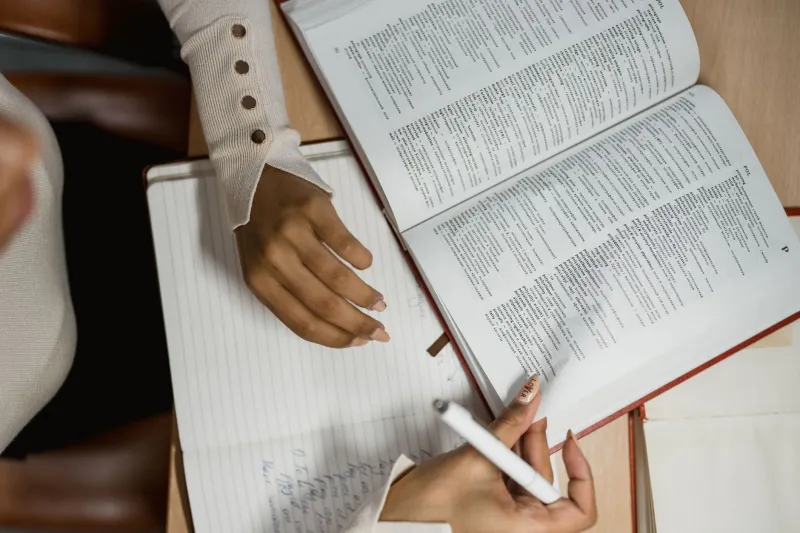
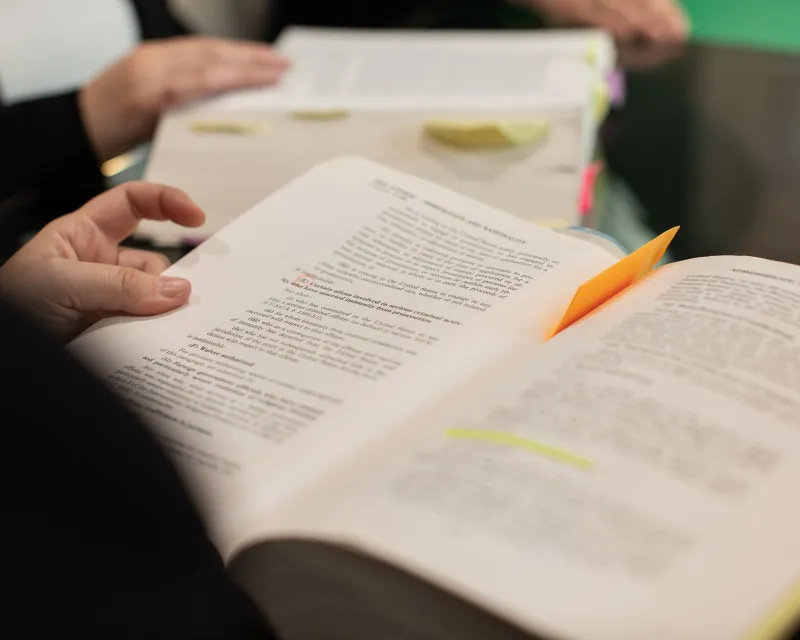
The Room Hears the Poem First: A Field Guide to Bilingual Audio
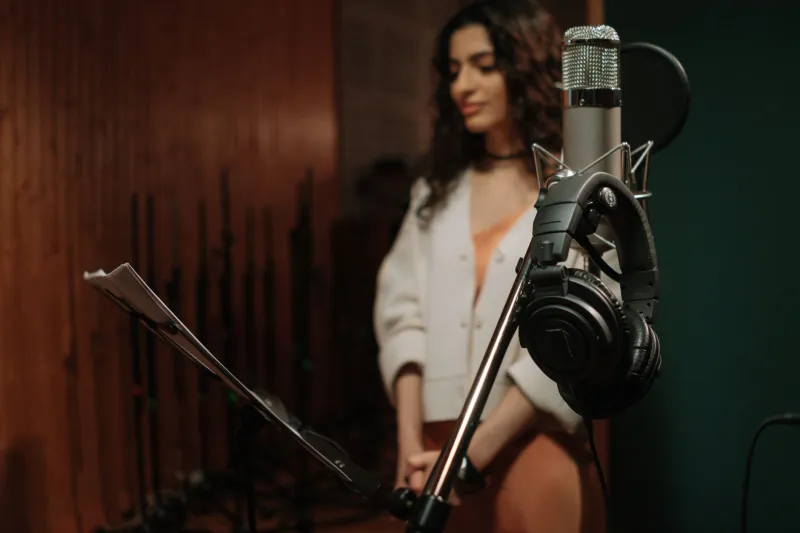
Most poems arrive on the page looking finished. Then someone reads them into a microphone, and the room starts talking back. A refrigerator hums. A chair creaks. The reader inhales before a line and the inhale becomes part of the line. I keep coming back to this because bilingual poetry recordings are not just convenience products for people who cannot read the original. They are alternate texts, built out of timing, air, and the physical fact of a voice in a place.
When I record a poem beside its translation, I am not trying to make a clean audiobook. I am trying to catch what the page cannot carry: the moment a reader decides to pause, the slight acceleration when a translator's line gets nervous, the ambient noise that says a poem was read by a person in a room rather than assembled by software. That is not a defect. It is information.
The room is a collaborator
A silent room is rarely silent. It has a floor tone, a furnace, traffic at the window, a neighbor's dog. In audio work we call this room tone. In poetry, I think of it as the poem's weather. A recording made in a carpeted study feels different from one made in a tiled kitchen or a public library stairwell. The same translated line can sound warm, stranded, hurried, or ceremonial depending on where it lands.
For bilingual recordings, room tone does something extra. It gives both languages the same acoustic floor. When the original and the translation share a room, they stop feeling like a source and a substitute. They become two inhabitants of the same space, breathing the same air.
Breath, pause, pace: three carriers of meaning
Punctuation is a crude map of breath. A comma can stand for a half-beat, a lift, a hesitation, or nothing at all. When a poet reads, those marks become decisions. The reader may breathe before a line break because the syntax demands it, or because the body refuses to go on without air. In translation, that breath can be the most honest guide to how a sentence is supposed to move.
Pause is the second carrier. Some pauses are grammatical. Some are dramatic. Some are simply the reader checking the next line. In a bilingual recording you can hear the difference between a pause that belongs to the poem and a pause that belongs to the reader's eyes. Both are useful, but they are not the same.
Pace is the third. A translator working in English may produce a line that looks calm on the page but reads fast and clipped aloud. A Chinese line may look dense but open up slowly in the mouth. Recording both versions exposes those mismatches. Sometimes the fix is in the translation. Sometimes the fix is in the reading. Often it is in the listening.
A bilingual recording checklist
-
Record one full minute of the room before anyone speaks. This is your room tone, and it will save you later when you need to bridge edits or create a quieter bed under the reading.
-
Use one microphone and one reader if you can. Consistency matters more than gear. A phone in a quiet room can be enough. Two different recording chains will make the two languages feel like two different projects.
-
Record the original first, then the translation. Do not read them line by line unless you have a specific reason. Let each version establish its own weather before you invite comparison.
-
Keep the false starts. A breath caught before a hard line is not a mistake. Label the take and move on. You can decide later whether it belongs.
-
Note the microphone distance. If the reader leans in for one language and back for the other, write it down. That distance is part of the performance.
-
Log ambient sounds as they happen. A truck, a door, a bird. In the edit you may want to keep them. In the archive you will want to know what they were.
-
Make a listening copy with no compression and no reverb. Save the polished version separately. The dry version is the one that teaches you what the poem is doing.
-
Do not clean the recording to death. Noise reduction can sand away breath. Breath is not noise. It is the reader's body keeping time.
A listener's guide for the first hearing
If you are encountering a bilingual poetry recording for the first time, resist the urge to follow the translation word for word. You will only get lost. Try this instead.
-
Listen to the first version without reading along. Notice where the reader breathes. Notice where the voice speeds up or slows down.
-
Let the second version arrive as a new room, not a caption. You are not checking accuracy yet. You are hearing what the same poem sounds like when it has been rebuilt in another language.
-
Treat ambient sound as punctuation. A hum under a line can make the line feel lonelier. A chair creak can mark a turn.
-
Listen once with your eyes closed and once with the text in front of you. The difference between those two hearings is the point.
What the page cannot hold
A bilingual audio recording is not a final statement. It is a document of a particular afternoon, a particular voice, a particular room. That is why it matters. The page can tell you what the translator chose. The recording can tell you how those choices breathe when someone has to live inside them for a few minutes.
If you make one this year, keep the room tone. Keep the false start. Keep the pause that was not in the script. The poem is often hiding there.