Skin in the Game: What Tattoo Requests Taught Me About Drafts That Don’t Get to Change
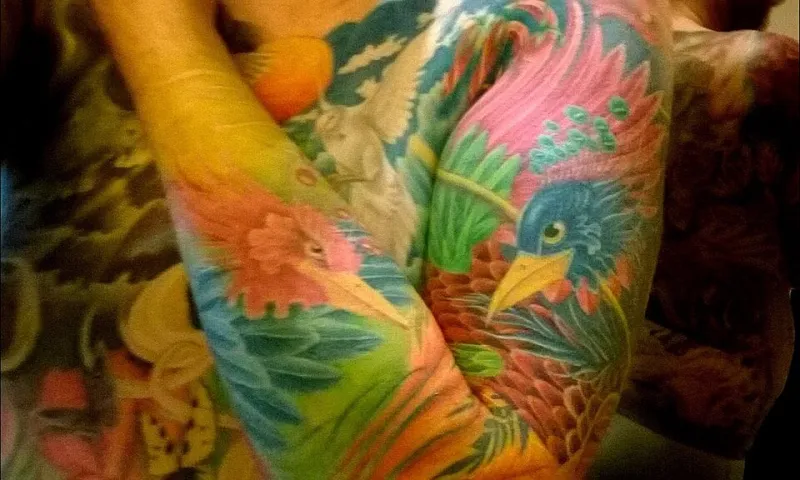
Photo: InvestigadorDeTodo, CC BY-SA 4.0, via Wikimedia Commons
The email arrived on a Tuesday, as these things do. A reader in Portland wanted to tattoo four words from a translated poem onto the inside of her wrist. She had the line saved in her phone, a screenshot with the font already chosen. She wanted to know if I could “confirm the translation was right.”
I read the line. It was not wrong, exactly. It was a rendering I had made years ago, then revised twice in later drafts, then abandoned in the published version. The sentence she loved had never made it into the book. She had found it in an interview, or a workshop handout, or some corner of the internet where early drafts go to live forever. She wanted to make it permanent.
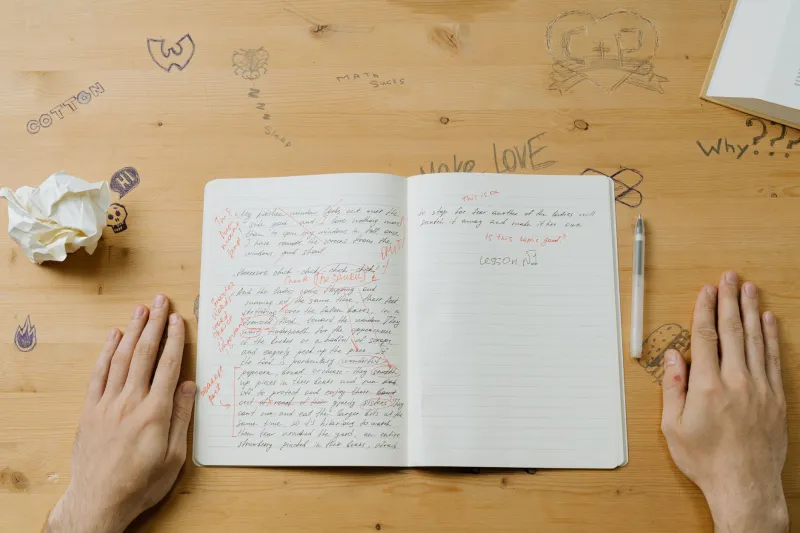
That is the moment a translator learns something about drafts. On paper, a draft is a provisional thing. You can change it. You can cut it. You can wake up at 2 a.m. and decide the verb was doing too much work. Skin does not offer that courtesy.
The request is rarely about the poem
People ask for tattoo translations for all the usual reasons: grief, love, a trip, a promise, a line that arrived when they needed it. But the request itself is almost never a request for literary criticism. It is a request for certainty.
They want to know the words are correct. They want to know the poet would approve. They want to know the grammar will not embarrass them in front of a stranger in a tattoo shop in Austin or Brooklyn. They want the line to mean what they think it means, and they want that meaning to hold still.
A translated poem is a bad place to look for stillness. It is a collaboration, a negotiation, a series of small decisions made by someone who is not the poet. That is not a flaw. It is the whole apparatus. But it does make a tattoo consultation feel less like proofreading and more like counseling.
The draft anxiety moves to the needle
Translators are trained to live with uncertainty. We keep notebooks. We make version after version. We argue with ourselves in the margins. We know that a line can be beautiful and inaccurate, accurate and tone-deaf, faithful and dead on arrival.
Tattoo requests strip that comfort away. There is no fourth draft on a calf. There is no “we’ll fix it in copyedits” on a rib cage. The client is not asking for a poem that can be revised. They are asking for a decision that will outlast the conversation.
So I have learned to slow down. I ask for a photo of the intended placement. I ask what the line means to them. I ask whether they have read the whole poem or only the excerpt. I ask if they have talked to the poet, when the poet is alive. I ask if they want the line to read as poetry on the skin or as a sentence that happens to come from a poem. Those are different requests, and they produce different translations.
Consent has more than one layer
A tattoo of a translated line involves at least three people: the poet, the translator, and the person under the needle. Sometimes there is a fourth: the tattoo artist, who has to make the thing legible at the size of a thumb.
When the poet is living, I do not treat my translation as a permission slip. I ask. Some poets say yes with delight. Some say yes with conditions. Some say no, and the no is not an insult. A line can be published and still not be available for permanent body art. That distinction makes people uncomfortable, but it is real.
When the poet is dead, the question changes. It becomes a question of estate, context, and care. I am more cautious with fragmentary lines, with lines that sound like slogans, with lines that could be read as advice when the poem was doing something stranger. I am not the police of anyone’s skin. But I am responsible for the version of the poem I helped make.
The internet’s poem is not the poem
Many tattoo requests begin with a misquote. Not a malicious one. A line gets copied from a screenshot, retyped with a missing comma, translated again by a machine, and then posted with a sunset behind it. By the time it reaches my inbox, it has the confidence of a proverb and the accuracy of a rumor.
Correcting someone is delicate. You do not want to be the person who ruins a meaningful phrase with a lecture about syntax. So I offer options. Here is the published version. Here is a more literal version. Here is a version that keeps the image but loses the rhyme. Here is what the line is doing in the poem, in case that changes what you want on your body.
Most people choose the version they already loved. That is fine. My job is not to overrule them. My job is to make sure they know what they are choosing.
A single phrase is a hard translation problem
A whole poem gives you room. A single line gives you a knife edge. You have to decide whether to preserve the metaphor, the music, the grammar, or the plain sense. You cannot preserve everything. Skin does not have footnotes.
I have come to think of these consultations as a specialized workshop. The client brings the constraint. I bring the drafts. Together we make a small, high-stakes decision about what a line can survive. In 2026, that process often includes digital mockups and shared documents, but the core is old-fashioned: say the line out loud, look at it in different sizes, wait a day, see if it still feels true.
My favorite outcome is not a perfect translation. It is a client who leaves with two versions and a promise to sit with them for a month. Temporary drafts are a gift. They let a poem be wrong for a while. They let a reader change their mind.
Permanent ink is the opposite of that gift, which is why it clarifies things. When someone asks a poem to become permanent, they are telling you what they actually want from it: not a theory of translation, not a defense of the translator’s choices, but a sentence they can carry. The least I can do is show them the seams before the needle starts.